 ENG
 ENG
General Questions
How does a shoot with Brad Watson Studio work, from the first conversation to the delivery of the images?
Everything starts with a phone call. We talk about what your brand wants to say, the world your product or service lives in, and who feels at home in that world: your customers. From that I create a mood board and a concept, and together we define what you will receive in the end: format, aspect ratio, number of images, retouching intensity and time frame.
After that I plan the shoot. I clarify where, when and how it takes place, which equipment I need, whether models, make-up artists or an assistant are needed, and which location fits the world of your customers. The meeting point and call time are also set in advance.
During the shoot, the plan and the mood board serve as the framework for the result, which ensures a correct and well-organized execution. Everyone on set takes on their role so that the best possible result is achieved in the end.
In post-production I follow your wishes on two separate points: how elaborate the editing should be and how quickly you need the images. One does not rule out the other. You can have simple editing with selection, light retouching and a color look, or heavy post-production with elaborate retouching, and either one quickly. Both affect the price, and with a very short turnaround, rush fees may apply. Everything is delivered in your own gallery, in all the aspect ratios and formats you asked for.
What does the studio take care of, and what do I not have to handle myself?
With Brad Watson Studio you get a full service. I handle the pre-planning, scout the location, select the models, book the make-up artists, photograph, and take care of post-production through to delivery. That gives you one point of contact from the first idea to the finished image, and you don't have to find, contact and coordinate individual service providers. I pay close attention to detail, from the planning in advance through the photography to the image editing.
How is the quote put together, and what does a shoot cost?
Every quote at Brad Watson Studio is individual, because the cost depends on what you really need, for example how many images you want and how extensive the post-production is.
In our project meeting we clarify what matters for your project so I can create a tailored quote. You receive it in writing and can approve it. That way you know before the shoot what it costs and what is included.
What if I don't like the result, or I don't know exactly what I want yet?
Thanks to the preliminary conversations, the mood board and the careful planning, you already know before the shoot what the outcome will be. If you don't yet know exactly what you want, I take over the creative direction in advance and develop the direction with you. If something doesn't fit during image editing, simple corrections are included: 1 to 3 rounds of corrections until the result is right. If you suddenly have an entirely new vision for the project, however, that no longer counts as a correction but as a new project.
What happens if something doesn't go to plan, such as bad weather, time pressure or a model cancelling?
With time pressure, I build buffers into the schedule at Brad Watson Studio from the start. I prepare a shoot thoroughly and allow for buffer time so that delays are absorbed and don't blow up the schedule.
With weather there are two options: either we find a replacement date quickly, or we work the weather into the concept. For outdoor clothing, for example, rain can be a dramatic element that speaks for the product.
For models from agencies, the agency is responsible for making sure the model shows up or cancels in good time. If a model cancels at short notice anyway, I weigh up how to proceed. If several models are booked, I check whether the plan still works without one of them. With only one model, we find a replacement date.
How are models, make-up artists and locations chosen?
At Brad Watson Studio, this always depends on your customers and the project, whether it's fashion, beauty, a hotel, a restaurant, a course or a product. When models are needed, I select them from agencies and choose them to fit your project and your customer avatar. I clarify the models' rights and costs with the agencies, usually including usage fees. We agree on the suggestions before anything is booked. If you have your own models you would like to use for the shoot, that is of course also possible by prior arrangement.
When make-up is needed, the make-up artists come from my own network. For the location, it depends on the project. For a hotel, a restaurant or a course, the place is usually already set. For fashion, beauty and product shoots, I choose the location based on the world of your customers, because the place has to suit the people who are meant to use your product. As with the models, your own location suggestions are of course welcome too.
How is brand identity preserved, and how is a stock-photo look avoided?
That works when the world of your brand is clear before the shoot. In the initial conversation we clarify what your brand wants to say, what the world your product or service lives in looks like, and who feels at home in that world. The mood board comes out of that, and during the shoot everything follows this plan. The result is images in which your customers recognize themselves and that don't look like interchangeable stock photos.
What is the atmosphere on set like?
It matters to me that everyone on set at Brad Watson Studio feels comfortable and is treated with respect, whether model, make-up artist or team. That is why I make sure there is a good mood and catering. You can see it in the images later, because expressive images come from places where people feel at ease. Everyone on set also has their own role, so everyone can concentrate on their part.
Fashion & Beauty
How natural does skin look after retouching?
At Brad Watson Studio, skin stays completely natural because I work with various retouching techniques such as dodge and burn. The skin is retouched and still looks like skin. My principle is that good retouching goes unnoticed and looks as if it never happened.
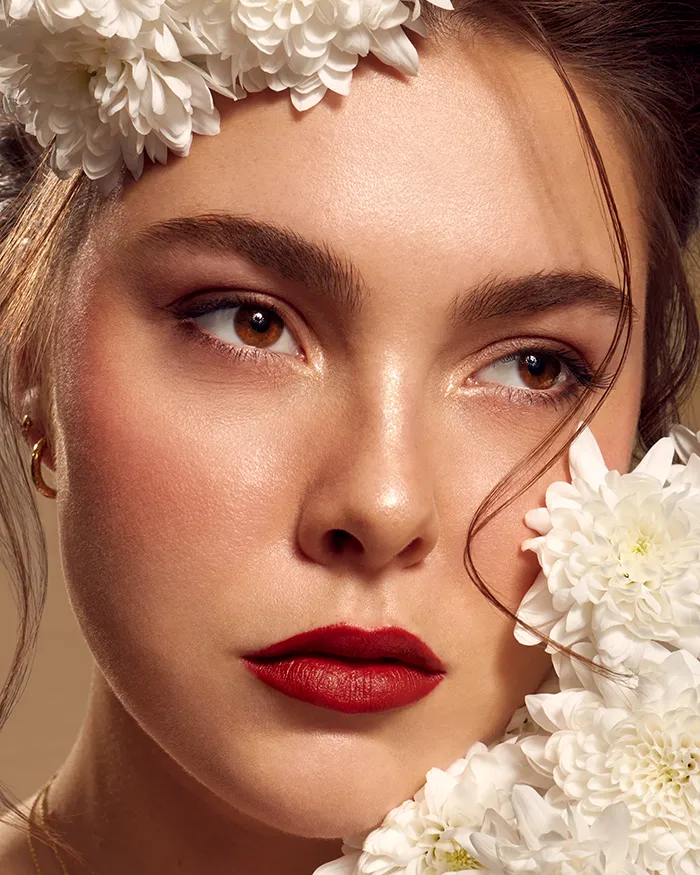 AFTER
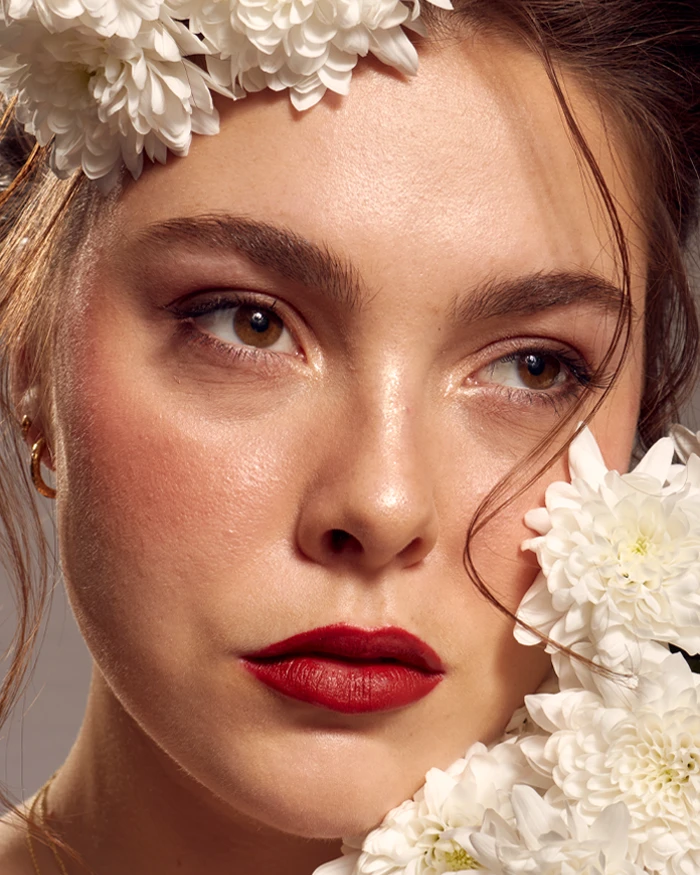 BEFORE
How do you make sure the clothing is shown in its best light?
At Brad Watson Studio, most of it happens on set. I use clamps to make sure the fit is right, and if necessary the clothing is ironed beforehand. The final touch comes in post-production with retouching, for example with frequency separation and liquify.
How heavily are images retouched, and who decides?
We decide how heavily I retouch together in advance. We discuss the retouching intensity in the initial conversation, together with format, aspect ratio, number of images and time frame. You decide how quickly you need the images and whether you need only light retouching or detailed retouching where every detail counts. Both affect the price, and with a very short turnaround, rush fees may apply. If something doesn't fit afterwards, 1 to 3 rounds of corrections are included.
Travel & Experiences
How does a hotel shoot work when the hotel is not empty?
There are several options, depending on what you want to show. For images with people, we can book actors who appear as hotel guests and whom I stage in unbooked rooms. For atmospheric shots of the ambience, I kindly ask real guests to vacate an area briefly. Alternatively, I retouch people out or blend them into the mood unrecognizably using long exposure, so the movement in the hotel becomes visible. I also use quiet times such as morning, midday or evening, or a season with fewer bookings.
How does Brad Watson Studio photograph in a restaurant without disturbing guests?
I deliberately choose closed days. On a closed day the atmosphere is calm and stress-free, I don't disturb any guests, and the focus is entirely on the images. If people should be in the picture, I book models or actors who stage the service as guests together with your staff.
How does course photography work, and what are the legal rules for participants?
At courses I photograph alongside the session so the course itself isn't interrupted. Beforehand I clarify whether all participants want to appear in the images, and I have model releases signed so the legal situation is clear. This produces images that show creativity and fun without anyone feeling put on the spot.
Product & Lifestyle
Why lifestyle images instead of product photos on a white background?
Lifestyle images, as the name suggests, convey a lifestyle, and a lifestyle is always tied to emotions. A product image on white shows nothing more than the product itself. A lifestyle image, by contrast, shows what the product makes possible: creativity and fun at a course, enjoyment and relaxation in a hotel, restaurant or spa. Or a cold drink at a picnic with friends that expresses freedom, with the sun on your skin and the refreshment as a lovely contrast. That stands for a good life and a small escape from everyday work. At the end of the day, people buy emotions, not goods, and the goods are only the means to a life full of emotions. These are exactly the emotions I make visible at Brad Watson Studio.
How does my product become a visual world?
At Brad Watson Studio, every visual world begins with an initial conversation. In it we clarify what your product should say, what world it lives in, and who feels at home in that world. The mood board comes out of that, with the emotions your customers are looking for, such as freedom, enjoyment or calm. I then shoot the images outdoors or on set so that your customers recognize themselves in them.